
The Art of Connection: Celebrating Both Commonality and Contrast
“We are far more united and have far more in common than that which divides us.” – Jo Cox
These words from Jo Cox resonate deeply. In a time when political debates, social unrest, economic disparity, and cultural misunderstandings seem amplified, connection with others feels more important than ever.
The challenges we face in today’s world often highlight our differences, and whilst finding common ground can give us comfort, what if it isn’t the only answer? As Audre Lorde wisely put it, “It is not our differences that divide us. It is our inability to recognise, accept, and celebrate those differences.” What if, instead of always seeking sameness, we embraced our differences as a starting point for understanding? Could it be that what makes us unique is just as powerful in forging connection as what we share?
This blog explores how both shared stories and unique perspectives, along with challenges and hopes, can bring people together to foster a more connected and compassionate society.
Why Social Connection Matters More Than Ever
Human beings thrive on connection. Research consistently shows that strong social bonds improve mental health, foster resilience, and even increase life expectancy. Unfortunately, modern life has a way of pulling us apart. From the isolation of digital interactions to the divides created by misinformation, it’s easier than ever to retreat into personal bubbles or echo chambers.
The consequences of this isolation are profound. A lack of connection between communities can breed misunderstanding, fear, and a sense of “otherness.” But the good news? Connection, even in small doses, has the power to bridge divides.
Take London, a city often seen as a melting pot of cultures. While its streets buzz with diversity, many newcomers feel isolated upon arrival. At the same time, lifelong residents of the UK may feel overwhelmed by the rapid pace of societal change. Yet, when people from different backgrounds come together – perhaps at a local festival or community exchange – their shared stories create a sense of unity.
But it’s not always about erasing differences to build connection. Sometimes it’s the curiosity about how someone’s experience diverges from your own that creates the strongest bond. Hearing what makes someone’s life unique – a tradition, a belief, or a perspective you’d never considered – can spark fascination, respect, and admiration.
The Role of Shared Stories in Building Bridges
Why are shared personal stories so powerful? Because they humanise.
Hearing firsthand about someone’s struggles navigating a new education system after migrating to the UK or their joy in celebrating their first Christmas in the British countryside doesn’t just inform you – it makes you care. Sharing stories isn’t just an exchange of words; it’s an exchange of understanding, experience, empathy, and trust.
Yet not every story needs to end with “we’re the same.” Some of the most transformative connections come when we allow ourselves to sit with difference. When someone describes a challenge or a joy that feels unfamiliar, it’s an opportunity to expand our understanding—not an excuse to reduce them to labels. At a time when dehumanising language like ‘alien’ seeks to divide, truly seeing one another as people, not categories, is more important than ever. Connection flourishes when we move beyond simplistic categories and engage with the real, complex stories of those around us.
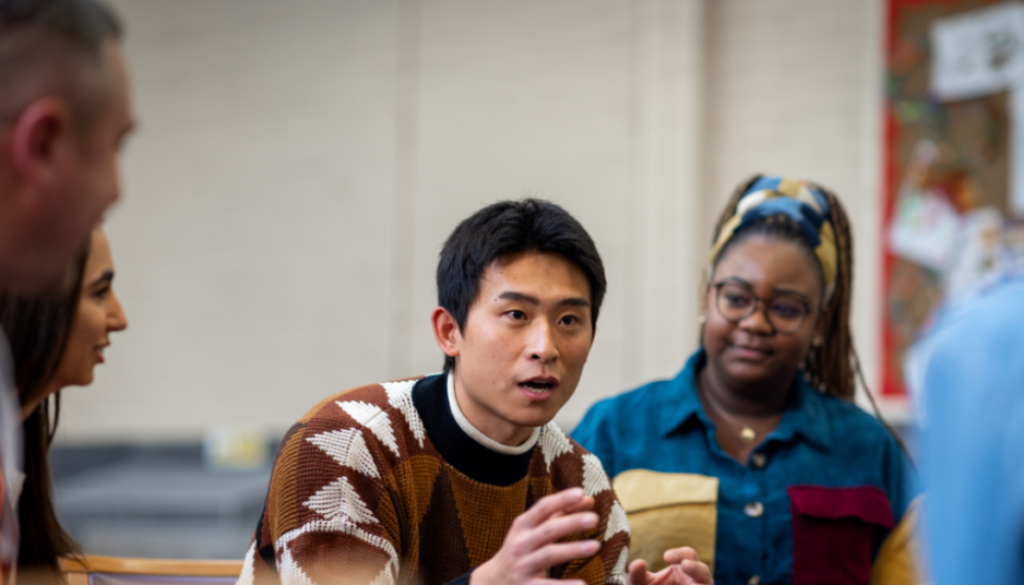
This is the philosophy behind programmes like Roots’ community exchanges, where groups of people who ordinarily wouldn’t meet, exchange stories of life living in the UK and beyond. These exchanges offer a glimpse into the lived experiences of others. They highlight that, while our paths may differ, our desires – safety, belonging, opportunity – are universal. Participants are encouraged to reflect on their own lives and reconsider their own judgments, paving the way for deeper connections.
Challenges as Universal Equalisers
Whether you were born in the UK or came here by choice, challenges are something we all grapple with. Health, employment, family struggles – these issues cut across boundaries of race, class, and nationality.
Take the COVID – 19 pandemic. Across the UK, individuals from varying backgrounds stepped up to support their communities. Migrants worked tirelessly as healthcare providers, shopkeepers, and delivery drivers, while local neighbours delivered groceries to the vulnerable. The crisis underlined an essential truth that we need one another.
But beyond global events, everyday challenges also unite us, for example: “Am I doing enough for my child?” Am I meeting my employers expectations?” “Should I be worried about my health?” “Am I being a good partner?” “Are we in a financially stable place?” These shared anxieties highlight that, at our core, we’re not so different.
When we acknowledge our shared struggles, we crack open the door for mutual understanding. That’s the magic of connection – it dismantles stereotypes and fear, replacing them with greater solidarity.
Hopes and Dreams Are Universal
If challenges unite communities in the present, hopes bring us together for the future.
We all hope for a better tomorrow – for our families, for ourselves, and for the wider society. Migrants to the UK may dream of stability, opportunity, or belonging, while many born in the UK hope for a return to shared values of kindness and fair play. These hopes aren’t oppositional; they’re complementary.
Practical Ways to Make Meaningful Connections
How can individuals and communities actively seek connection in divided times?
1. Approach Every Conversation With Genuine Curiosity: Avoid assumptions and instead ask, “What’s your story?” Then, simply listen, allowing others words to shape your understanding.
”2. Celebrate Local Diversity: Attend festivals, explore new cuisines, or visit cultural workshops. The UK is rich with history and heritage – yours, mine, and ours combined.
3. Support Initiatives Like Roots: Organisations like Roots offer structured programmes that connect people from different walks of life, creating a brave spaces for dialogue and understanding.
4. Start Small, Stay Committed: Building connections doesn’t require grand gestures. A smile, a shared laugh, or a genuine “How are you doing?” can spark a ripple effect.
Walking the Lines Together
When we prioritise connection, we don’t just gain understanding—we gain the tools to navigate a more complex and diverse world. It’s not just about finding common ground; it’s about celebrating the ways our differences enrich those connections.
By stepping outside our bubbles, we create opportunities to truly see one another—not as strangers, but as neighbours and collaborators in shaping a more inclusive society. Connection is about learning to walk the lines between us.


